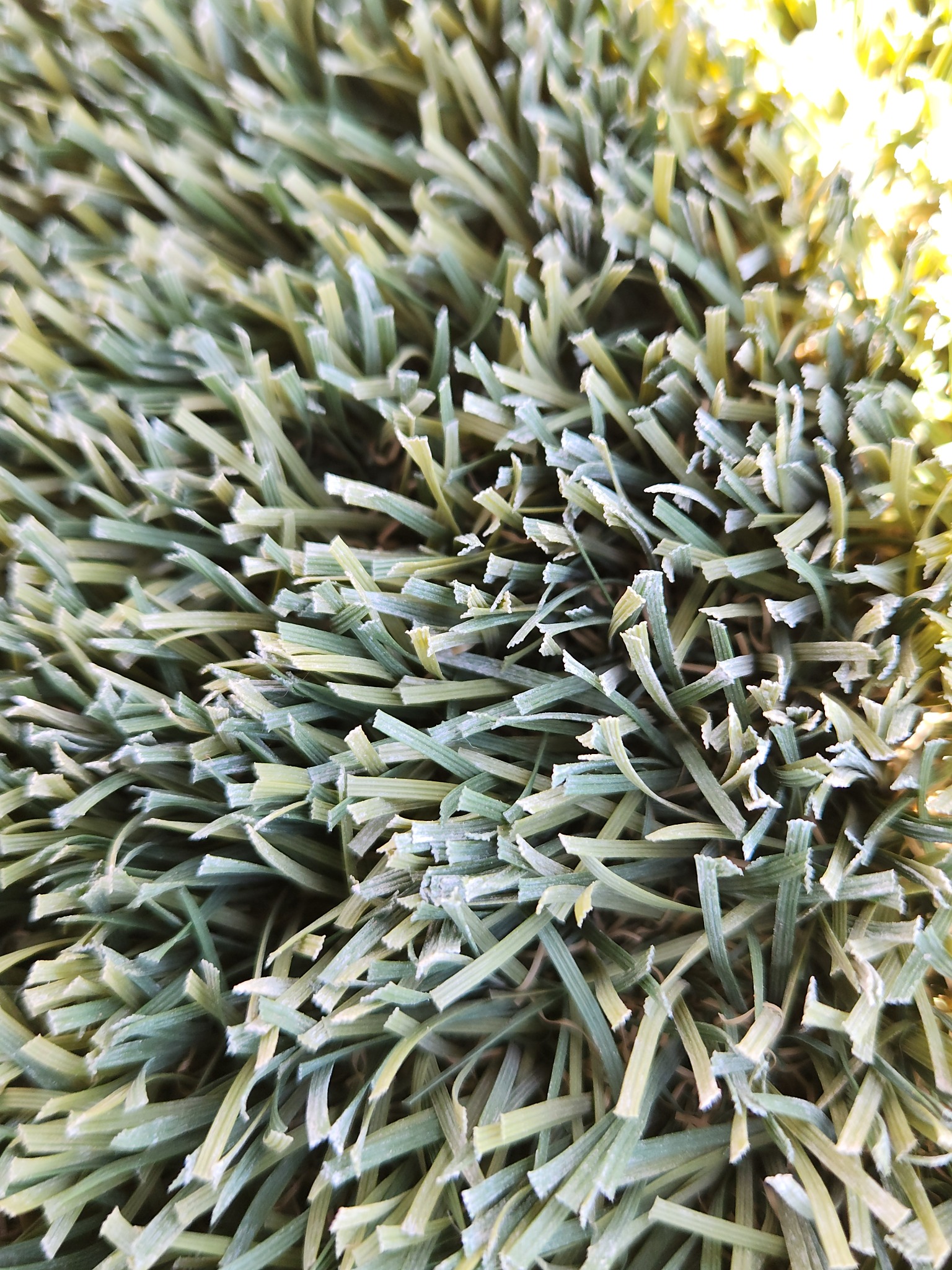
If your green turf is taking on white, gray or chalky-looking patches, it is reasonable to wonder whether the turf itself is failing. Sometimes it is a surface issue; other times it is a mineral-buildup problem that needs more than a quick rinse. The useful next step is identifying what is actually on and in the turf before choosing a treatment.
What the white buildup may be
Southern Utah water can leave minerals behind as repeated irrigation, splash or overspray dries. Those deposits can collect on turf fibers and work down into the material below the blade tips. Homeowners often call the visible result calcification because it resembles the hard-water scale seen on faucets, glass or pool tile.
That description is useful, but it is not a laboratory diagnosis. White turf can also involve fine dust, residue from a prior product, infill, wear, sun exposure or more than one condition at once. A responsible recommendation starts with a close look at the pattern, the water source, traffic and what has already been tried.
Why rinsing often does not solve it
A rinse can remove loose dust, but mineral scale is not always loose material sitting on top of the fibers. Once deposits have dried repeatedly, they can cling to the surface and combine with trapped fines, organic debris and old infill. More water alone can leave the same minerals behind again when it dries.
This is why a yard may look better for a moment after being wet, then turn dull or chalky again. It is also why a simple sweep may not restore the original color or texture when the issue has moved below the visible surface.
Skip the aggressive DIY experiment.
High-pressure washing can disturb infill, stress seams or backing, and push debris deeper into the system. Casual chemical mixing can create safety, discoloration and runoff problems. If you do any homeowner cleaning, keep it gentle, follow the turf manufacturer’s care instructions and test a small inconspicuous area first.
What ClearTurf does differently
When mineral buildup appears to be part of the problem, ClearTurf scopes a controlled mineral-scale treatment rather than treating the yard like a driveway. The process is tailored to the turf condition and typically combines treatment for the deposit, careful agitation, thorough rinsing and deep extraction of the loosened material.
The goal is not to make a blanket promise that every white mark will disappear. It is to remove as much recoverable buildup as the turf system can safely release, restore a cleaner baseline and explain the factors that may limit the result. Severe wear, damaged fibers, drainage problems or installation issues can still remain after cleaning.
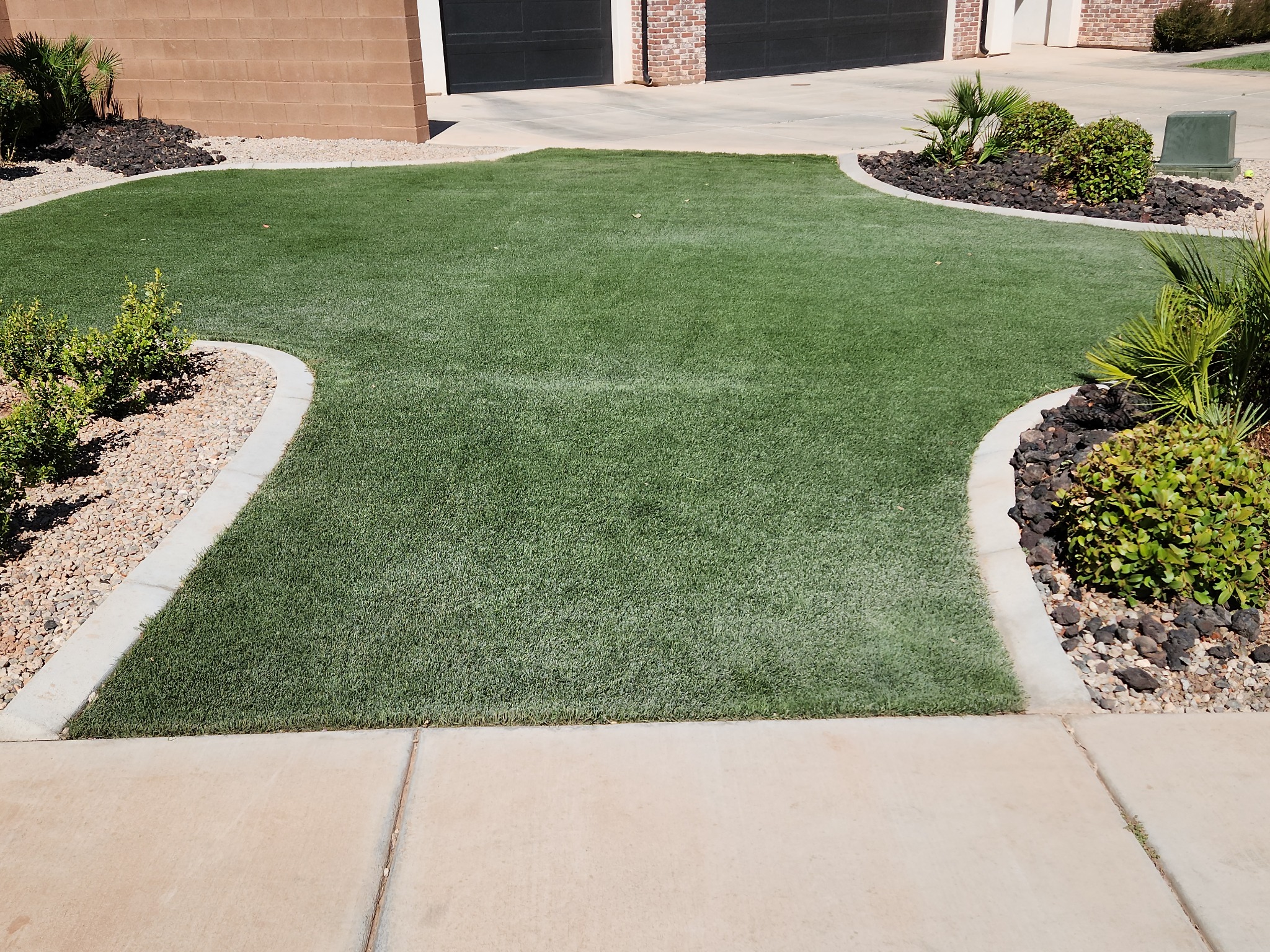
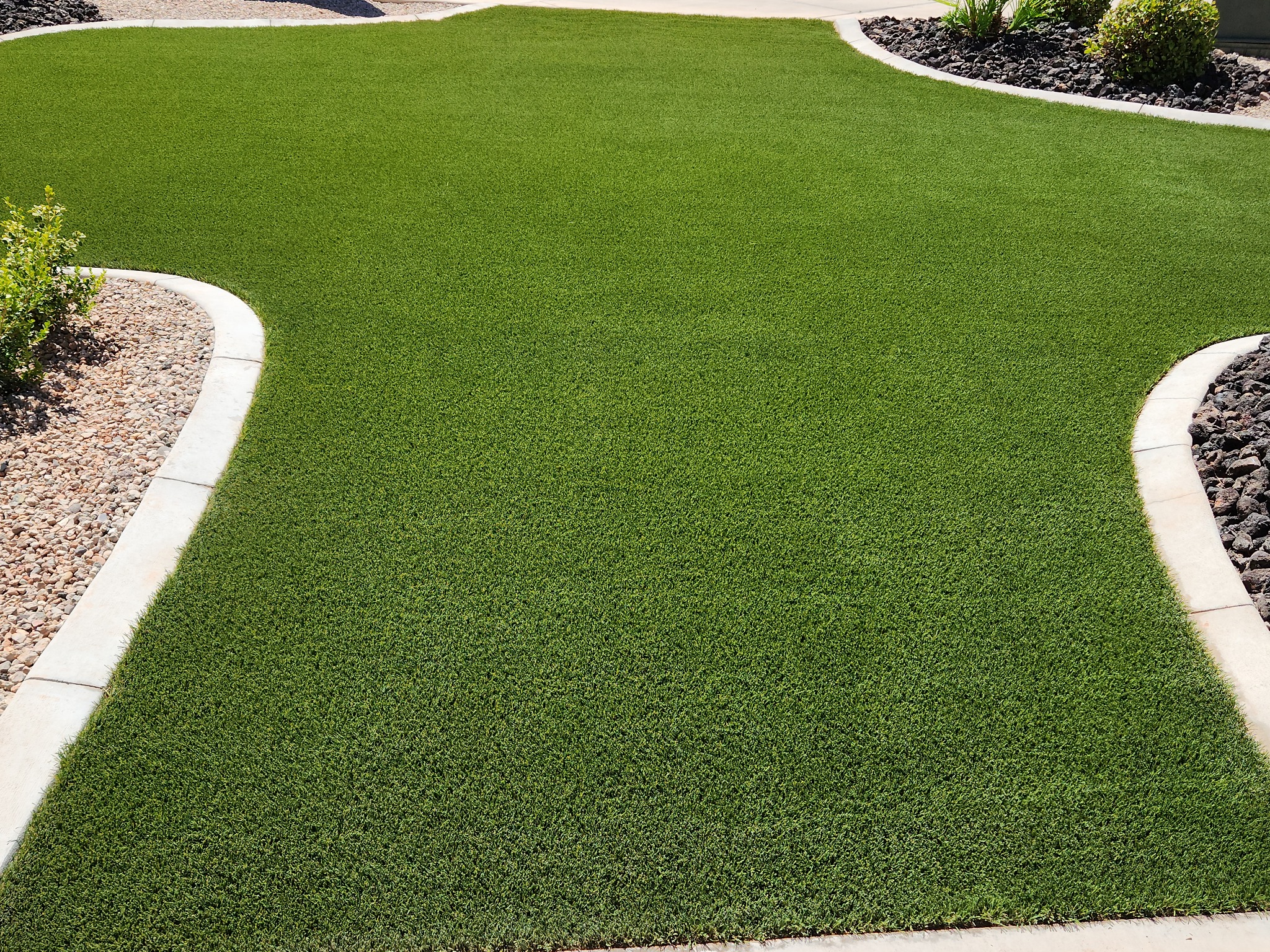
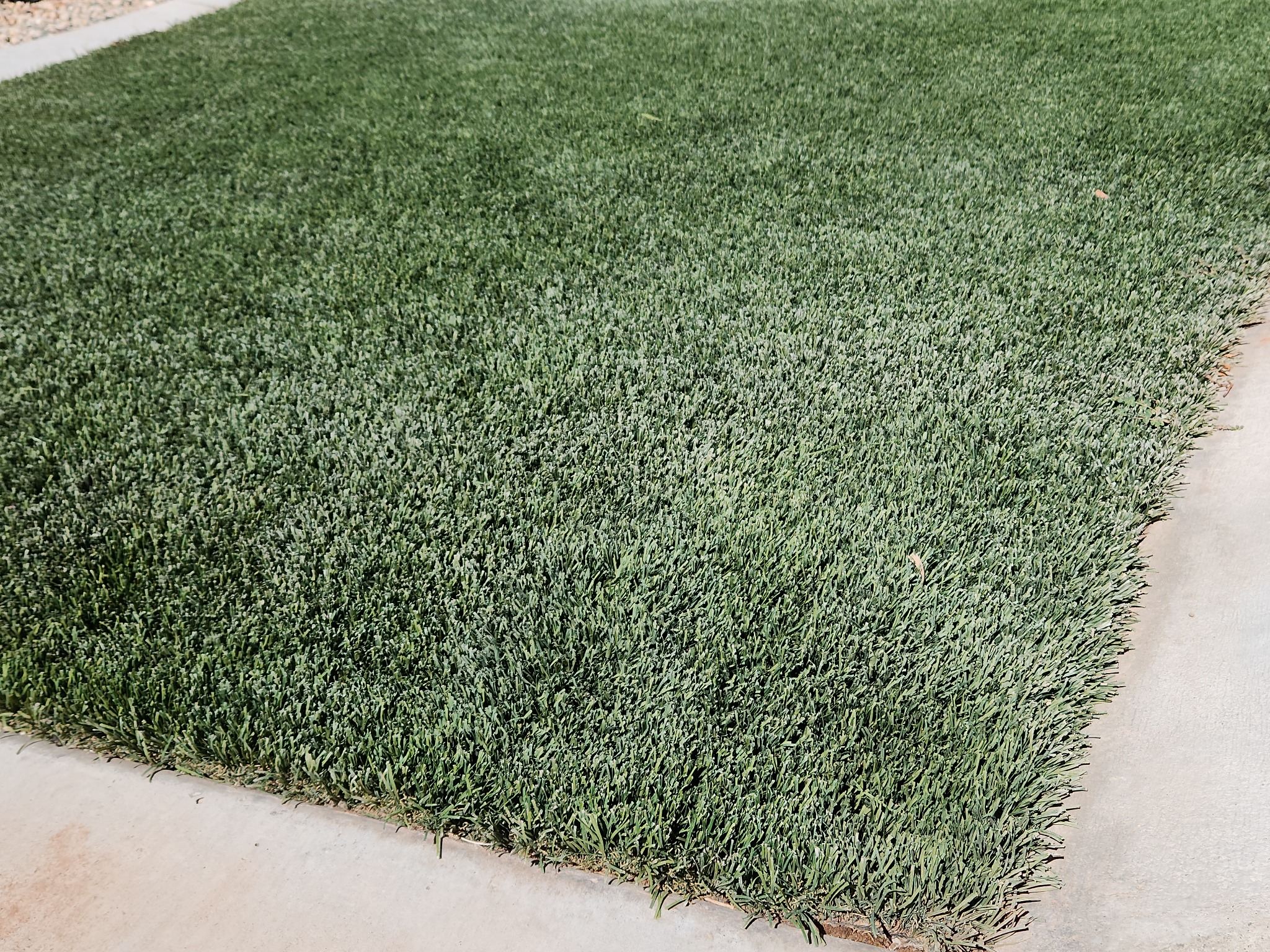
Real field evidence: before and after restoration
These are original ClearTurf field photos from the same restoration project. The difference is not a filter or an artificial recoloring of the turf; it came from addressing the material affecting the turf system, then cleaning and grooming the yard back toward a more even finish.
How to reduce future mineral buildup
- Check sprinklers for overspray that repeatedly wets the turf, walls and nearby hardscape.
- Address irrigation leaks and drainage issues so water is not repeatedly drying in the same zones.
- Remove dust, leaves and organic debris before they combine with moisture and settle into the turf.
- Use a practical maintenance cadence for exposed or high-use areas instead of waiting for the buildup to become severe.
- Ask before applying an unfamiliar cleaner; a product that is safe for concrete, tile or natural grass is not automatically right for artificial turf.
Does white turf mean it needs replacement?
Not automatically. A professional assessment can help separate a recoverable buildup issue from fiber wear, backing trouble, seam damage, failed drainage or an installation problem. A Refresh, Reset or Restore recommendation should follow the condition—not force every yard into the biggest package.
For turf with depleted or contaminated material below the fibers, a more involved restoration may also include an infill assessment. The right scope is the least complicated one that can meaningfully help.