When artificial turf looks flat, holds debris or struggles with recurring pet odor, the answer is not always a surface spray. The fibers, backing, trapped material and infill all work together. A stronger result usually starts by assessing that entire system.
What infill actually does
Infill settles between the turf fibers. A properly selected and installed infill can help support blade position, add weight to the turf system and contribute to the finished feel underfoot. It also affects how the lawn looks after grooming: the goal is a fuller, more even surface—not a coating that sits visibly on top.
That does not mean every yard needs new infill. Turf with light use and a sound existing system may only need cleaning and grooming. When the infill is depleted, compacted, contaminated or no longer supporting the fibers, replenishment can be part of a meaningful restoration plan.
Why we clean before adding new material
Fresh infill works best after the accumulated problem has been addressed. Leaves, hair, fine desert dust, organic debris and old material can collect below the visible blade tips. If those conditions are left in place, adding new infill alone can make a difficult system harder to assess later.
Our restore process begins with the actual condition of the turf: remove what can be removed, clean and treat the scoped areas, correct what is realistically correctable, then install and work in new material where the plan calls for it. The final grooming is what creates the lifted, fresh-mowed look—not a shortcut around the underlying work.
Where zeolite fits in a pet-turf plan
Zeolite is commonly used in pet-turf systems because it can adsorb ammonium. In a compatible turf system, it can be installed as part of a targeted odor-management plan. It is one useful layer—not a substitute for pet-waste pickup, drainage, cleaning or treating accumulated odor-producing residue.
Pet Shield is a system, not a magic bag.
For qualifying yards, ClearTurf may combine preparation, OxyTurf treatment, zeolite support, fresh infill and a practical maintenance recommendation. The right combination depends on use, turf condition, drainage and what we find below the surface.
Why use Camofill after zeolite?
For a recent Hurricane restoration, ClearTurf installed zeolite first for odor support, followed by Camofill to help rebuild the turf’s finished appearance. Camofill is a rounded, earth-toned infill designed to blend into the thatch rather than leave a conspicuous layer. Its manufacturer also describes an antimicrobial coating intended to inhibit the growth of odor-causing bacteria, fungi and algae.
That product characteristic does not make routine care unnecessary. It is one part of a clean, well-supported turf system—especially when paired with consistent pet-waste removal, realistic rinse habits and the right professional cadence.
A real Hurricane, Utah restoration
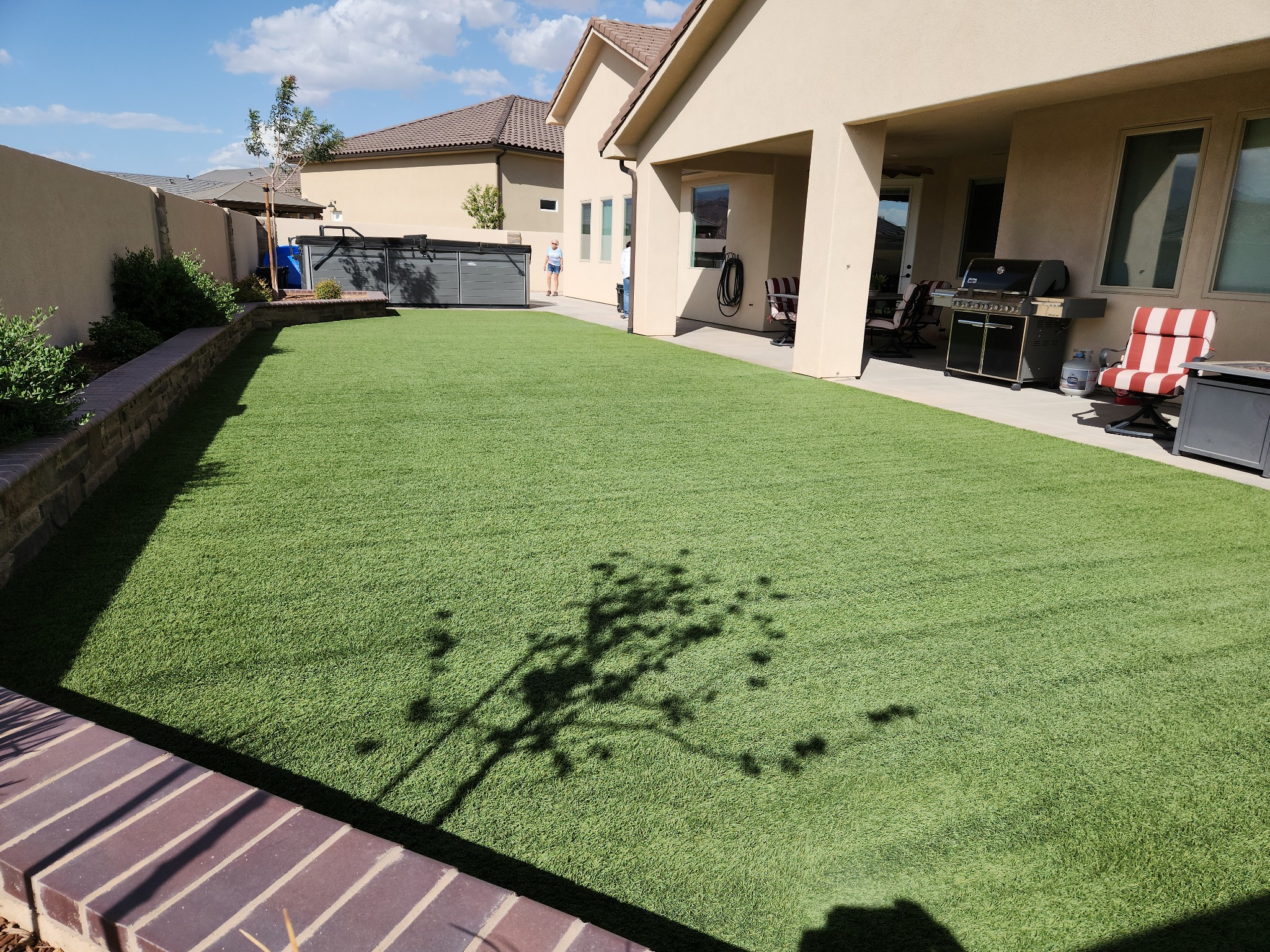
This full restore involved widespread calcification and extensive debris trapped in the turf. The project used 11 bags of zeolite followed by 16 bags of Camofill, then detailed grooming to bloom the fibers into a clean finished lawn. OxyTurf treatment was included in the scope at no additional charge for this particular job.
The homeowners selected quarterly deep cleaning afterward, which is a sensible way to preserve a clean baseline after more involved restoration work. Quarterly service is not a rule for every yard; it is a recommendation based on how the property is used and what the turf needs to maintain its finish.
See the Hurricane project photos, from before through the final finish.
When an infill installation may be worth discussing
- Turf stays matted or thin-looking after ordinary grooming.
- The existing infill is depleted, compacted or mixed with heavy debris.
- A pet area has recurring odor and needs a fuller Pet Shield assessment.
- The yard is receiving a restoration and needs a stronger finished look afterward.
- You want to establish a clean baseline before beginning recurring maintenance.
What to expect from a ClearTurf recommendation
We will explain whether cleaning, a reset, a restoration, new infill or a combination makes the most sense. You will know what we are trying to improve and why. If the backing, drainage or installation condition limits the outcome, we will say that plainly rather than sell material a yard does not need.