Homeowners can do a lot to keep artificial turf looking good: pick up pet waste, remove loose leaves, rinse thoughtfully and address small messes early. Professional care becomes valuable when debris is settled down in the system, fibers stay flat, infill needs attention or odor keeps coming back.
“A hose is all artificial turf needs.”
Rinsing can help with surface dust and fresh pet areas. It does not remove trapped leaves, hair, fine debris or compacted material below the blade tips. Rinsing is a useful habit—not a substitute for deeper cleaning when the system is loaded.
“More product always means better odor control.”
Odor care starts with the cause. A fragrance-heavy product may make the yard smell different without addressing the conditions creating odor. Product choice, preparation, cleanup, infill and maintenance all matter.
“A stronger cleaner or more pressure must work better.”
Before changing products or increasing pressure, check the turf manufacturer’s care instructions. The right approach depends on the material, seams, infill and the type of mess. A tool used carefully within an assessed professional scope does not make every nozzle, distance or dilution appropriate for home use.
Follow the cleaner’s label and do not combine products. If you have already tried several treatments, tell us which ones before we recommend anything else. See our peroxide and enzyme guide for the difference between chemistry and application conditions.
“If the turf is green, it is clean.”
Artificial turf can look green while holding debris, flattened fibers or odor-producing residue below the surface. That is why we inspect how the yard feels, smells and performs—not just its color from the patio.
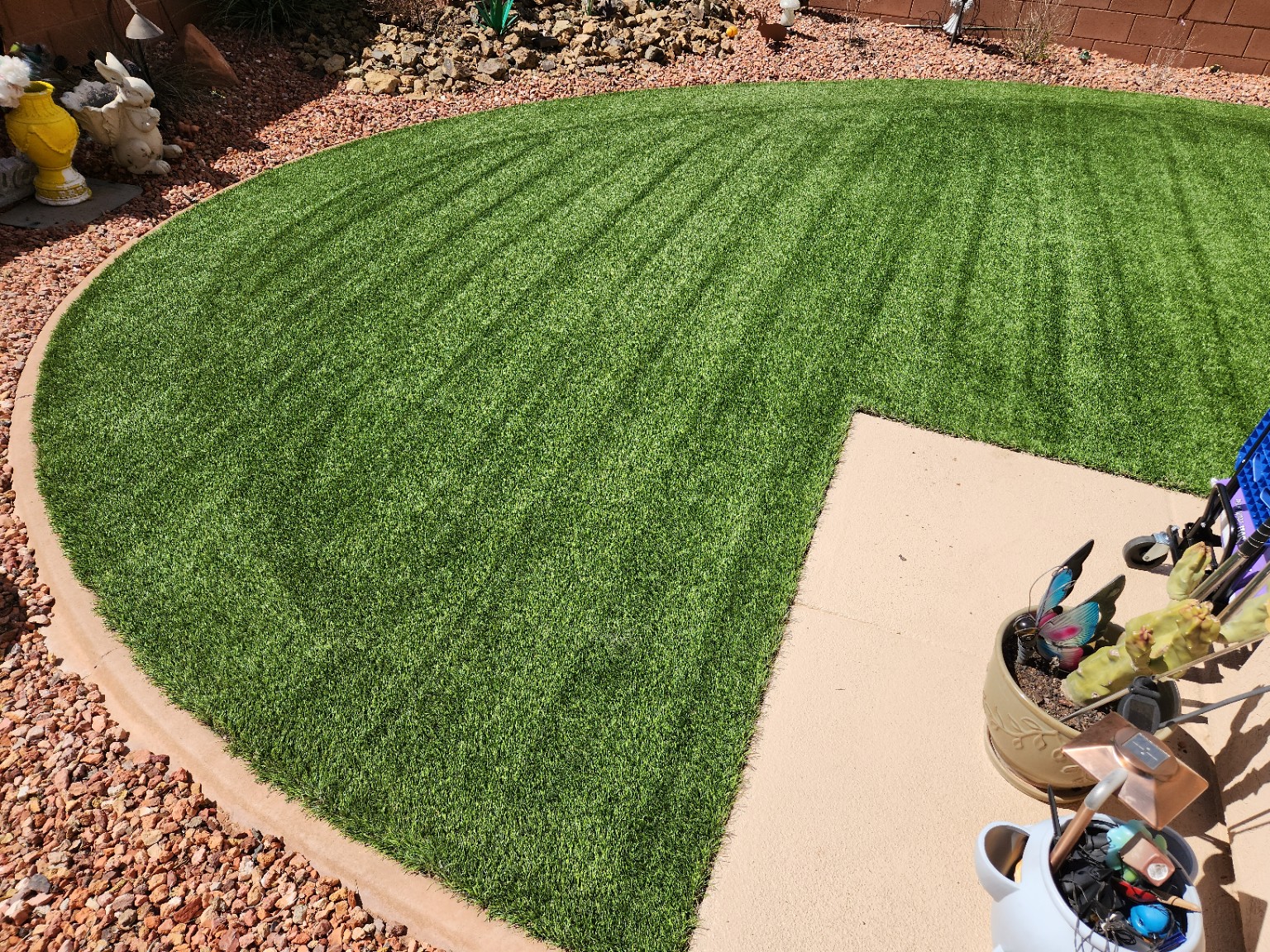
“A fresh striped finish proves the whole system is fixed.”
We take pride in grooming, but the finish is only part of the job. Infill support, trapped material, pet use and drainage still matter. Persistent ponding, damaged backing or an open seam needs assessment; brushing a pattern into the surface will not resolve those conditions.
“Every yard needs the same monthly deep clean.”
A yard used by several dogs can need a different rhythm from a lightly used front lawn. Traffic, surrounding plants, drifting debris and what you do between visits all influence the recommendation. Start with the actual condition and adjust the cadence as you learn how the yard responds.
A useful between-visits routine
- Pick up pet waste promptly and remove loose leaves before they work deeper into the fibers.
- Watch favorite pet spots, high-traffic routes and edges where debris collects.
- Rinse and brush only as your turf maker recommends, using suitable tools and allowing drainage.
- Take a close photo when a problem repeats. Record the product used and the conditions that brought the odor back.
You are maintaining a baseline, not trying to reproduce a full restoration at home.
When to call ClearTurf
Call when DIY care stops changing the condition of the yard. We will tell you whether a Refresh, Reset, Restore, targeted odor treatment or simple homeowner maintenance is the right next step. Sometimes the best answer is a quick recommendation—not a big service.